- Behind idolatry is our fear, and a need to gain control when we are powerless.
- Once we see how it worked in Biblical times it is easier to spot ‘control’ pattern in our relationship with God, and replace it with genuine trust.
Play Audio:
- Story from the novel Sense and Sensibility
- If there is one thing that human nature cannot stand, it is being in a situation where we are helpless and out of control.
- Story of 747 Jumbo Jet Flight simulator
Goal:
Goal: To help us spot a ‘control’ pattern in our relationship with God,
and replace it with genuine trust
Idolatry, Fear & Control
- How Idolatry Works
- How God wants us to relate to him
- A theme in the Bible from beginning to end
- Living this out daily
1. How Idolatry Works
1. How Idolatry Works
- It is an attempt to gain control by persuading some “Power” to help you
- In ancient times they had a god for everything they wanted to control.
- Can you name anything they might want to control?
- rain
- war
- fertility
- health
- A man or woman will set up an idol as a representation of a god
- and worship it in order to persuade his god to do certain things
- things that he wants and over which he has no control
- Today, you and I don’t usually set up an idol in our home, but we will consider later...
- In ancient times, for example, in Canaan
- What would the Canaanites want control over?
Statue of Ba’al
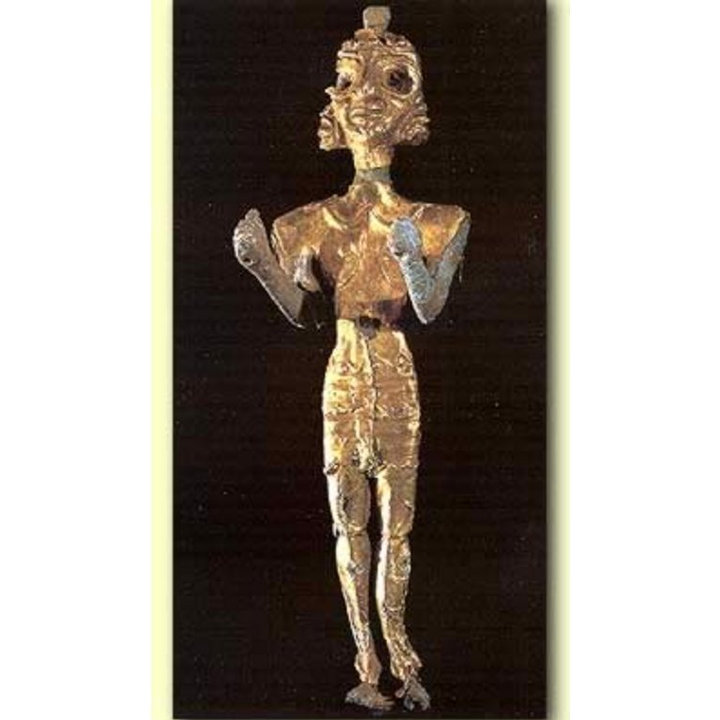
Larger statue of Ba’al
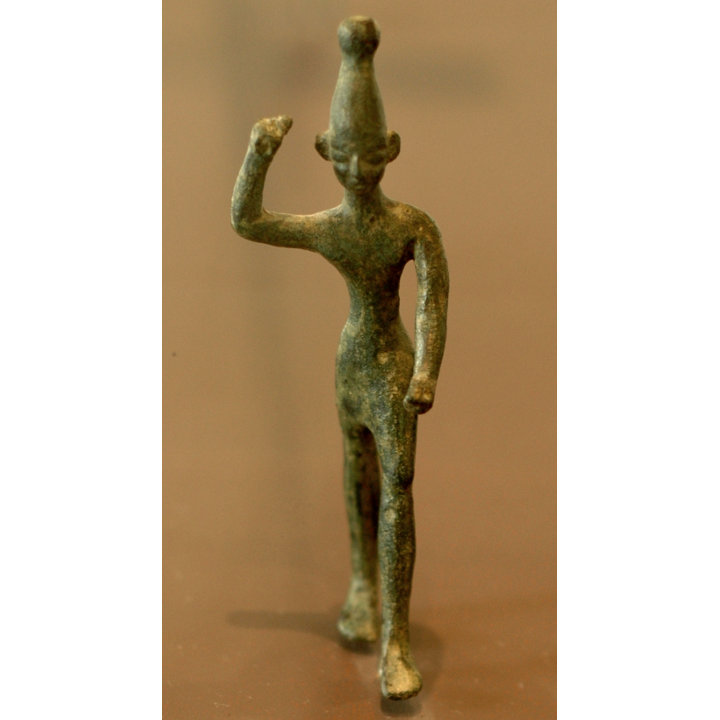
- arm raised to throw a thunderbolt —weather, but also useful in war!
Ba’al with his consort Astarte (fertility)
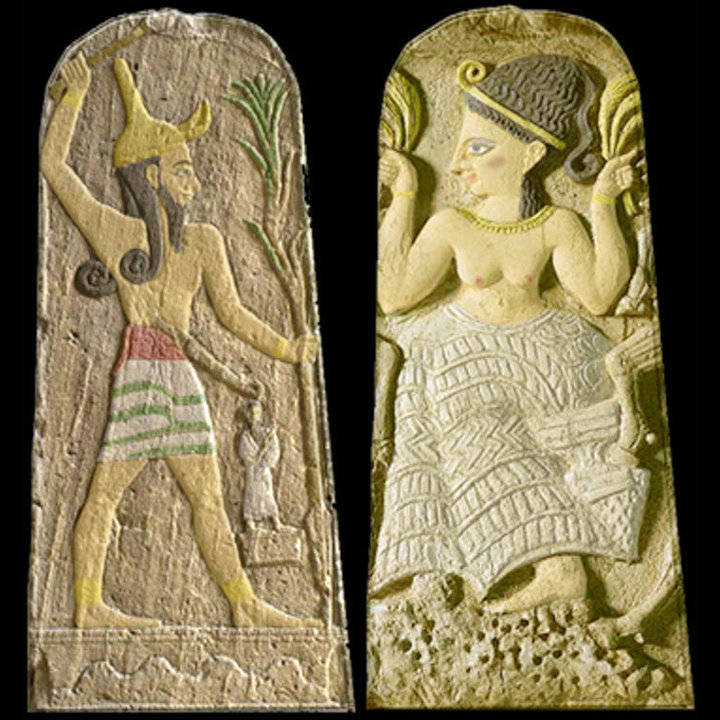
- Image of Ba’al with his consort Astarte (fertility goddess)
- Arm raised again, and also making vegetation grow
- War
- War is a frightening, uncertain thing, so if you are going out to battle, it is vital to make sure that your god is on your side.
- (this is also Ba’al or some variant)
Astarte (fertility goddess)
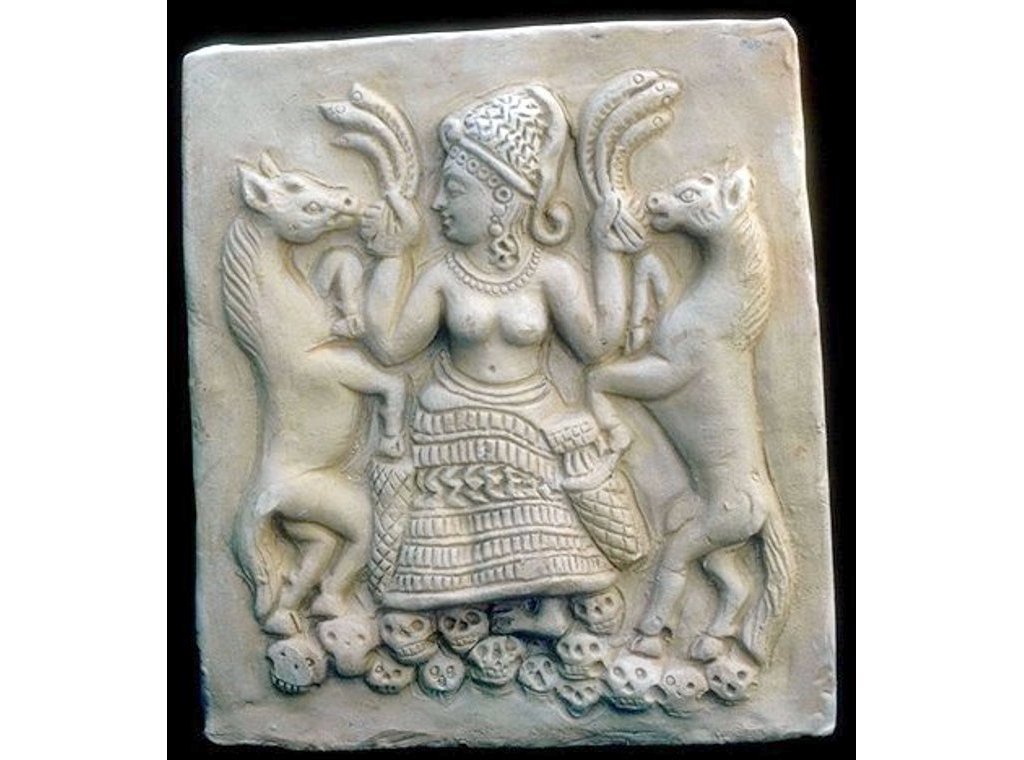
- Fertility
- They wanted to have lots of children, animals to reproduce, land to be fertile & crops to grow
- Fertility was vitally important, but the frustration was that they had little control over it. The only way to gain control was to persuade or manipulate a fertility god to give what was wanted.
- This might take the form of sacrifices of increasing magnitude depending on the urgency of the situation.
Cupid (god of love)
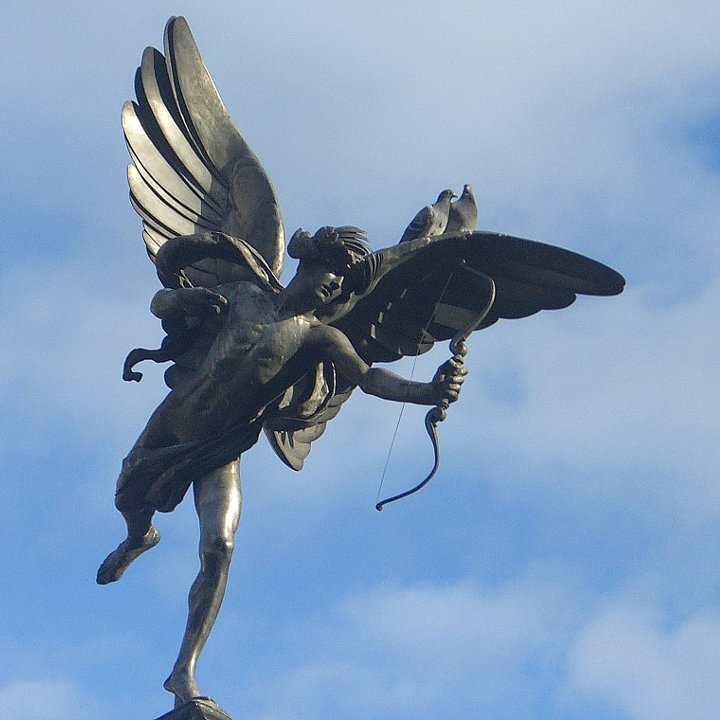
- Love
- of course we can’t leave out the god of love. Even today everyone knows the name of Cupid, the Roman god of love.
Who can make another person fall in love with them? We are out of control, unless we manipulate the situation
by persuading Cupid to fire his arrow into the heart of our intended.
- also health and prosperity etc.
- The idea was that if you wanted control in a situation, you had to find the god who was responsible, and get them on your side.
- In Rome there were a huge number of different gods
How Idolatry Works
- We want certain things that we cannot get directly
- So we try to manipulate a deity to get what we want.

2. How God wants us to relate to him
- The true God HATES to be manipulated
- Today I will take a couple of main passages, but show it’s a theme that goes through Scripture.
2. How God wants us to relate to him: (Deut 32)
- The LORD will have compassion on his people,
will change his plans concerning his servants;
when he sees that their power has disappeared,
and that no one is left,
whether confined or set free.
- He will say, “Where are their gods,
the rock in whom they sought security,38
who ate the best of their sacrifices,
and drank the wine of their drink offerings?
Let them rise and help you;
let them be your refuge!
- See now that I, indeed I, am he! says the LORD,
and there is no other god besides me.
- God says “I am sovereign. You cannot manipulate ME, you cannot twist my arm to make me behave in a particular way. I decide what I am going to do because I am the sovereign God.”
Love and Trust
- The way that God wants us to relate to him is
- to worship him because we trust him, because we love him.
- We don’t worship him in order to get him to give us the good things that we want in life.
- Not think that if I have read the Bible for an hour every day this week he will answer my prayer
- because he loves us he will give us what is good.
- Our response is contentment with what he gives us.
- Job says, “Though he slay me, yet will I trust him.” (Job 13:15)
- Job’s attitude is completely opposite to that of idolatry; it is not “I will trust him so that he keeps me alive,” but “whatever he does I know that his plan is good.”
- It’s so important to get this or we’ll be carrying a burden in our life
- (Of course he wants us to love him back)
- Think of it this way—if you have a friend who is only nice to you when they want something out of it… Not good!
- Treating us like an object
Worship: Two ways
- As a means of gaining control
- In trusting adoration

- Between these two there is a fundamental tension.
- God does want us to ask for things—it’s when we do it in a demanding or manipulative way
- He wants us to believe that he is a good Father!
3. A theme in the Bible from beginning to end
- Between these two ways there is a fundamental tension
- And this goes right through the Bible
- We’ll do a quick trip now
3. A theme in the Bible from beginning to end
- Adam & Eve
- The Tower of Babel: Making a Name
- Command to spread out, to “make a name”,
but Abraham & Sarah were willing to do the opposite:
- Sarah & Abraham: Faith & the promised Child
- Israel worship golden calf or invisible God
- The Ark: an Idol? (Eli)
- God absolutely refused to be treated like an idol
- Saul (False king)
- David: “Man after God’s own heart”
- The Jews (Hebrews)
- turned the Scriptures into an idol
- Jesus: the Ultimate Example (Iesus)
- not about your performance persuading God. Just trust my love
- This is why the Jews were so offended by Jesus breaking their sabbath “laws”
- Your performance can never be enough
- but I’ve done enough, and all you have to do is to trust me and follow me
- “I am the way, the truth and the life”
- How do you respond to this Jesus?
- Jesus’ 3 temptations were to take control
David: Psalm 20
- Some trust in chariots and others in horses,
but we depend on the LORD our God.
- They will fall down,
but we will stand firm.
King Asa: 2 Chron 14
- And Asa cried out to the LORD his God, and said,
“LORD, it is nothing for you to help,
whether with many
or with those who have no power;
help us, O LORD our God,
for we rest on you,
and in your name we go
against this multitude.”
King Jehoshaphat: 2 Chron 20
- “Our God… we are powerless against this huge army that attacks us! We don’t know what we should do; but our eyes are upon you.”
- All the men of Judah were standing before the LORD, along with their infants, wives, and children.
- He said: “Pay attention, all you people of Judah, residents of Jerusalem, and King Jehoshaphat! This is what the LORD says to you: ‘Don’t be afraid and don’t panic because of this huge army! For the battle is not yours, but God’s.
4. Living this out daily
4. Living this out daily
- The Test of Faith
- Sometimes God deliberately puts us in a situation where we are out of control
- sometimes, medical, financial, relational
- How do we respond to this test?
- Only two things are really important in this world
- God is all powerful
- He loves me
- We don’t really know this till we have been through it.
- This is what happened with Abraham & David
- He says: Don’t fear—come to me, trust me
- Not: “if I spend an hour a day reading my Bible, then maybe he’ll answer my prayer”
- God is way above that and hates that kind of thing
- He gives us good things because he loves us
- Jesus hanging on the cross is the ultimate example of trusting the Father
- Let’s end with a practical exercise: What is your biggest prayer for 2026
- Can you trust God with it?